What you can keep inside an openable necklace
What people keep inside an openable necklace, what size of note fits each design, what should never go inside, and how to place something in the chamber with care.
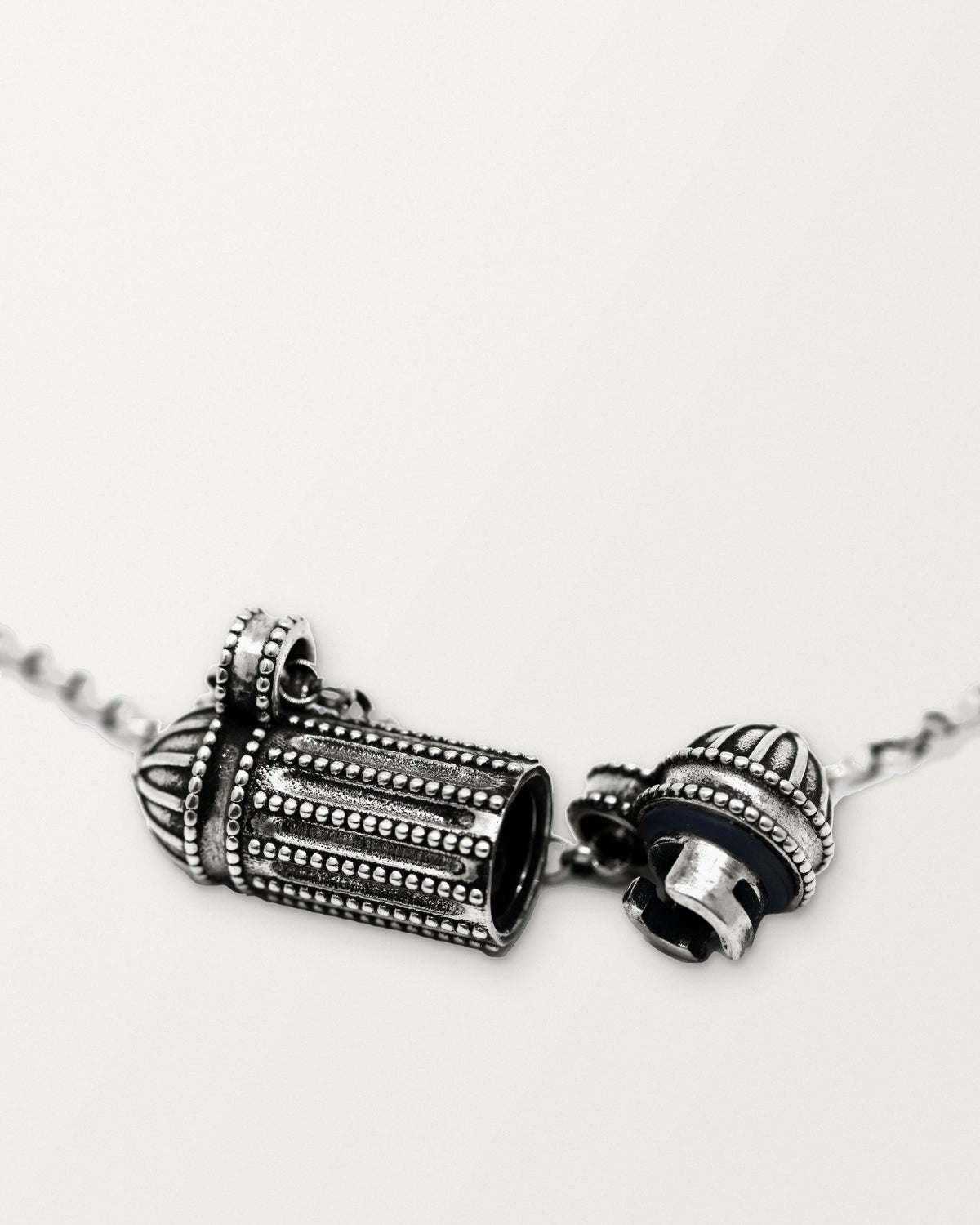
An openable necklace is a small, private place you can wear. For centuries, people have carried written prayers close to the body in small amulet cases made to open. This guide covers what people keep inside one, what size of note fits, what should never go in, and how to place something inside with care. It is written by Kavacha Designs | Sacred Armor™, where every piece opens to a chamber.
What people keep inside
What goes inside is yours to choose. Here are the things a chamber is made to hold, including what Jayashri, who designs every Kavacha, has kept in her own.
- A written prayer or mantra. A line of scripture, a mantra, or a prayer in your own words, written on a small strip of paper and rolled. Jayashri has kept handwritten mantras in hers. In Hindu devotional traditions, an amulet that holds a mantra can be a kavacha. See What is a kavach?
- A vow or an intention. A promise to yourself or to someone else, written down so it stays with you. Our VRAT ring takes its name from the Sanskrit for vow.
- A lock of hair. From a child's first haircut, from someone you love, or from someone you've lost. Jayashri has kept a lock of hair from her daughter's first haircut, and hair from her horse's mane. A locket for a lock of hair covers how to place it.
- Earth, sand or dust from a place. Sand from a beach that matters, soil from a family home, or dust from a holy place. Jayashri has carried dust from Vrindaban, in India.
- A small amount of ashes. A trace of someone you love. Our guide to keeping a loved one's ashes close covers this gently and in detail. For a dog or a cat, see a necklace for your dog's or cat's ashes. The designs with the most room inside are together in necklaces for ashes.
- A note in someone's handwriting. A few words from a parent, a partner or a child, cut small enough to roll.
Some people never tell anyone what is inside. Others choose a piece because of what it will hold. Either way, the chamber is private: nothing about the outside of the piece shows what you placed in it.
If what you carry is for someone you have lost, our page Carry Them Close offers a simple ritual and a card to print and keep with your piece.
What should never go inside
Every Kavacha chamber is made for small, dry things. Please don't place any of these inside:
- Liquids, oils or perfume, including anointing oils and holy water.
- Anything damp or fresh, such as fresh flowers, leaves or food.
Once something irreplaceable is inside, a Kavacha is not meant to be opened and closed casually or repeatedly, although it can be reopened when necessary.
Every Kavacha necklace closes with a twist-lock and a silicone seal, which makes the fit snug. Water resistance has not been tested, so please don't treat a Kavacha as watertight, and take it off before swimming, bathing, hot tubs or saunas. The full guidance is on Caring for Your Kavacha.

How big a note fits
We worked out these sizes from each design's 3D files, for ordinary printer paper rolled loosely. They are a guide, not a test, so try a plain strip of the same size first. The width is the long side of the chamber; the length is how much paper rolls up to fit.
- Moksha: a strip about 32 mm wide and 50 mm long. Moksha is long and slim, made to carry personal notes, prayers or affirmations.
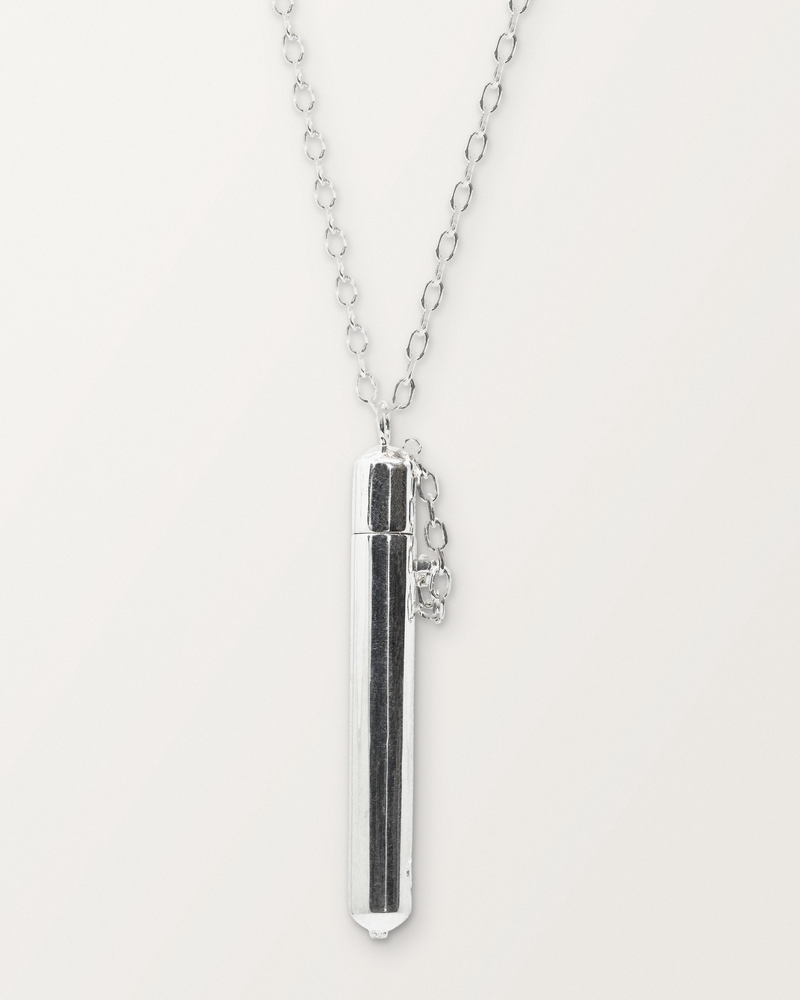
- Capsule Small: about 15 mm wide and 100 mm long. A compact, everyday capsule with clean, straight lines.
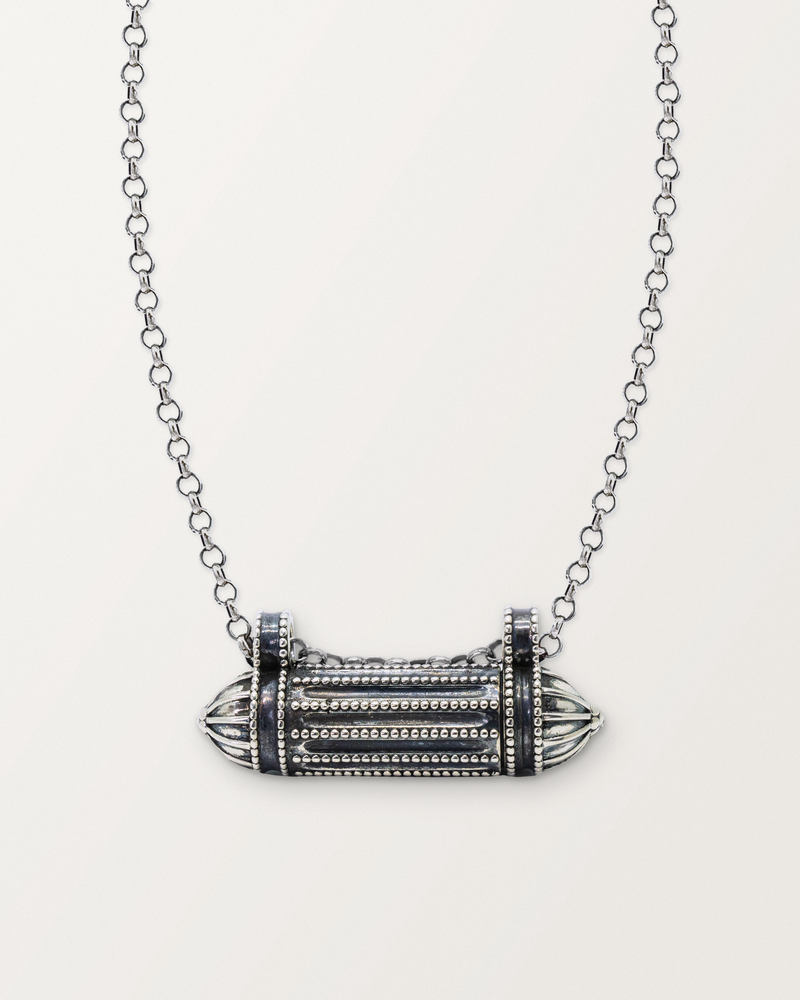
- Taweez: about 21 mm wide and 120 mm long. Its form comes from the traditional taweez, an amulet that holds a written prayer. See What is a taweez?
- Narashimha: about 28 mm wide and 160 mm long. The first design in the collection.
- Kerala Large: about 37 mm wide and 320 mm long. The largest chamber in the collection.
- Shakti: about 20 mm wide and 40 mm long, for a single line or a name.
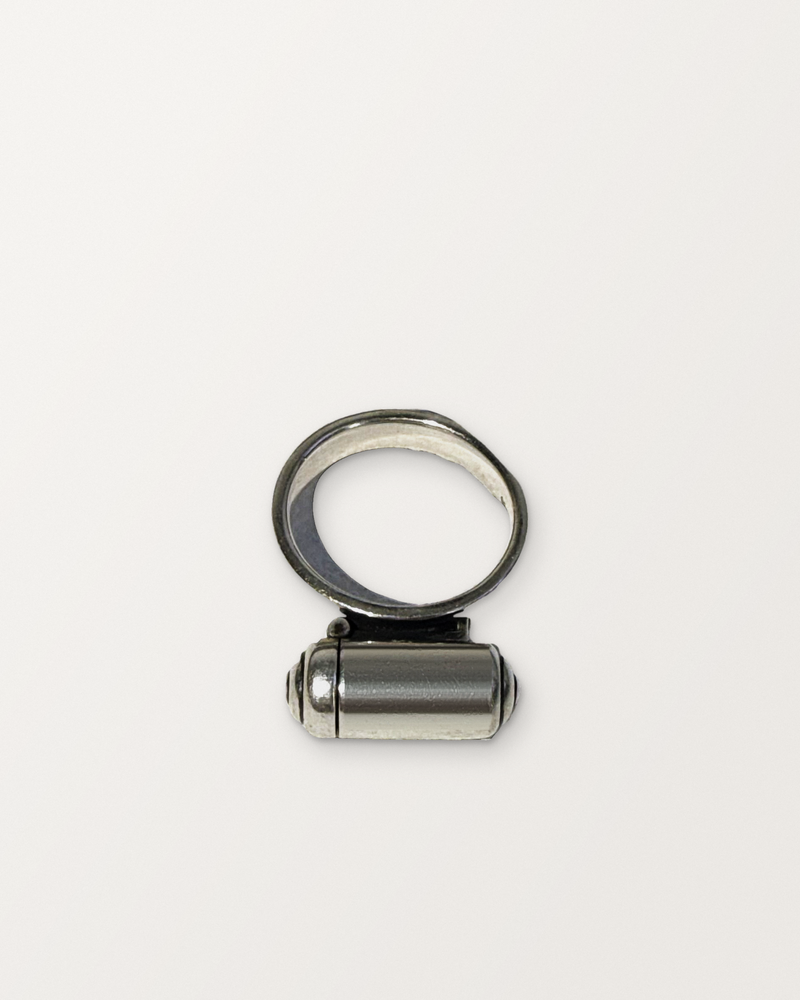
A few words written small on thin paper go a long way. If you want to carry a longer prayer, choose a larger chamber, or write it on the thinnest paper you can find. The VRAT ring holds a small folded note under a hinged cap. That cap has no silicone seal, so take the ring off before washing your hands.
The Narashimha has a hollow cap. The measured length includes the space inside the cap, so the strip that fits is narrower than shown. Chamber sizes lists the inside and the opening of every design.
How to place something inside
- Choose a dry, quiet place. Sit at a table in a dry room. Make sure the piece, your hands and whatever you are placing inside are completely dry, including the ink on a note.
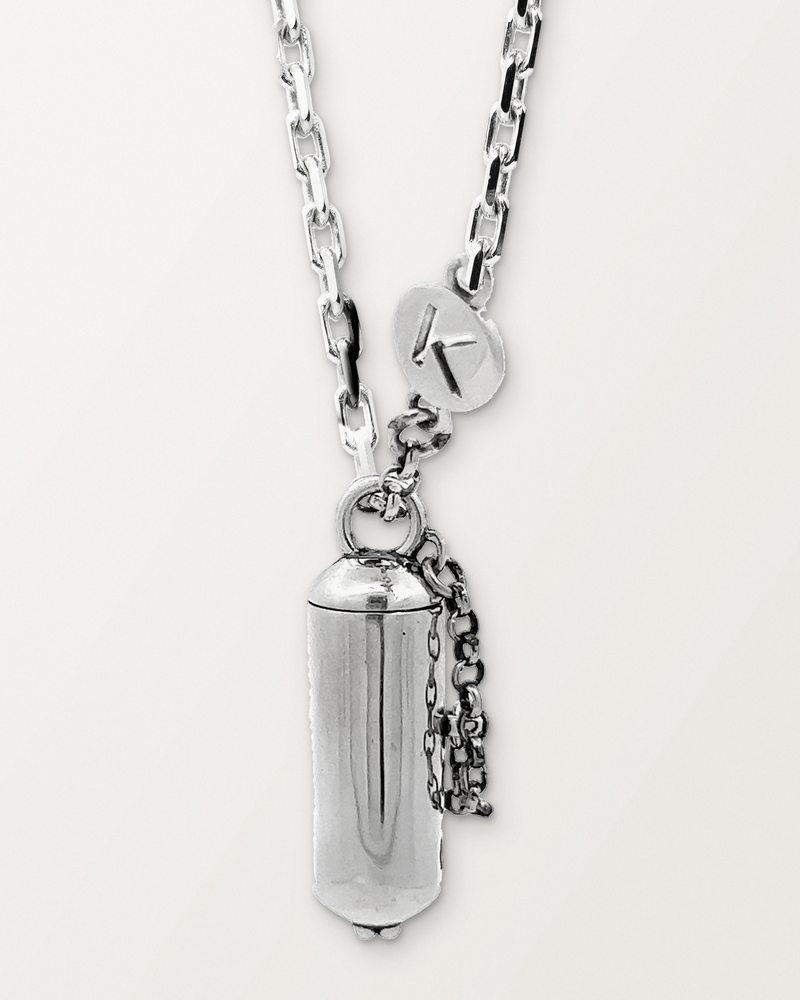
- Open it by hand. Twist the cap to open it. The end cap stays on the chain by its bail, so it can't slip away while the piece is open.
- Roll or fold small things first. Roll paper around a toothpick or a thin skewer, then slide it off and ease it in. For hair, a few strands tied with a thread are easier to place than a loose lock. For sand or earth, a small funnel or a folded piece of clean paper helps.
- Leave room for the cap. Fill only enough that the cap closes easily.
- Clean the opening. Brush away any dust or fibers from the opening and the silicone seal, so nothing sits across it.
- Close it by hand. Twist the cap closed until the fit is snug. Never use tools, don't oil or grease the seal, and never glue the cap.

Choosing a piece for what it will hold
Start with what you want to carry, then choose the shape. A rolled prayer suits a long, slim chamber such as Moksha or Taweez. A lock of hair or a little earth is easier to place through a wider opening, such as Narashimha or Kerala Large. For ashes, see how much each design holds in our ashes guide. Vertical Cross is a slim vertical capsule that houses the cross, honoring the Christian tradition.
Every design is cast in 925 sterling silver, and most are also made to order in 14K or 18K yellow gold, which takes 4 to 6 weeks. If you would like help choosing, tell us what you want to keep and we'll suggest the right chamber. You can reach us on our contact page.
Questions people ask
What can I put in an openable necklace?
Anything small and completely dry: a written prayer or note, a lock of hair, a little sand or earth, dust from a holy place, or a small amount of ashes. Never liquids, oils, perfume or anything damp or fresh.
How big a note fits inside?
It depends on the design. Worked out from the design files, a loosely rolled strip of printer paper fits from about 9 × 50 mm in Vámana, the smallest, up to about 37 × 320 mm in Kerala Large. Try a plain strip of the same size first.
Can I open it again later?
Yes. Every Kavacha opens by hand, without tools. Once something irreplaceable is inside, we recommend opening it only when you need to. Never glue the cap: glue makes the closure permanent.
Is it waterproof?
Please don't treat it as waterproof. The silicone seal makes the fit snug, but water resistance has not been tested. Take it off before swimming or bathing, and keep what's inside completely dry.
Can anyone see what is inside?
No. The chamber is closed and private. What you keep in it is known only to you and whoever you choose to tell.
More guides: Keeping a loved one's ashes close, What is a taweez? and What is a kavach? Read more about what a Kavacha is, or browse the whole collection.