What is a taweez? The amulet, its history and how it is worn
What a taweez is, where the word comes from, what it holds, how long people have worn one, the different views on wearing a taweez in Islam, and our Taweez.
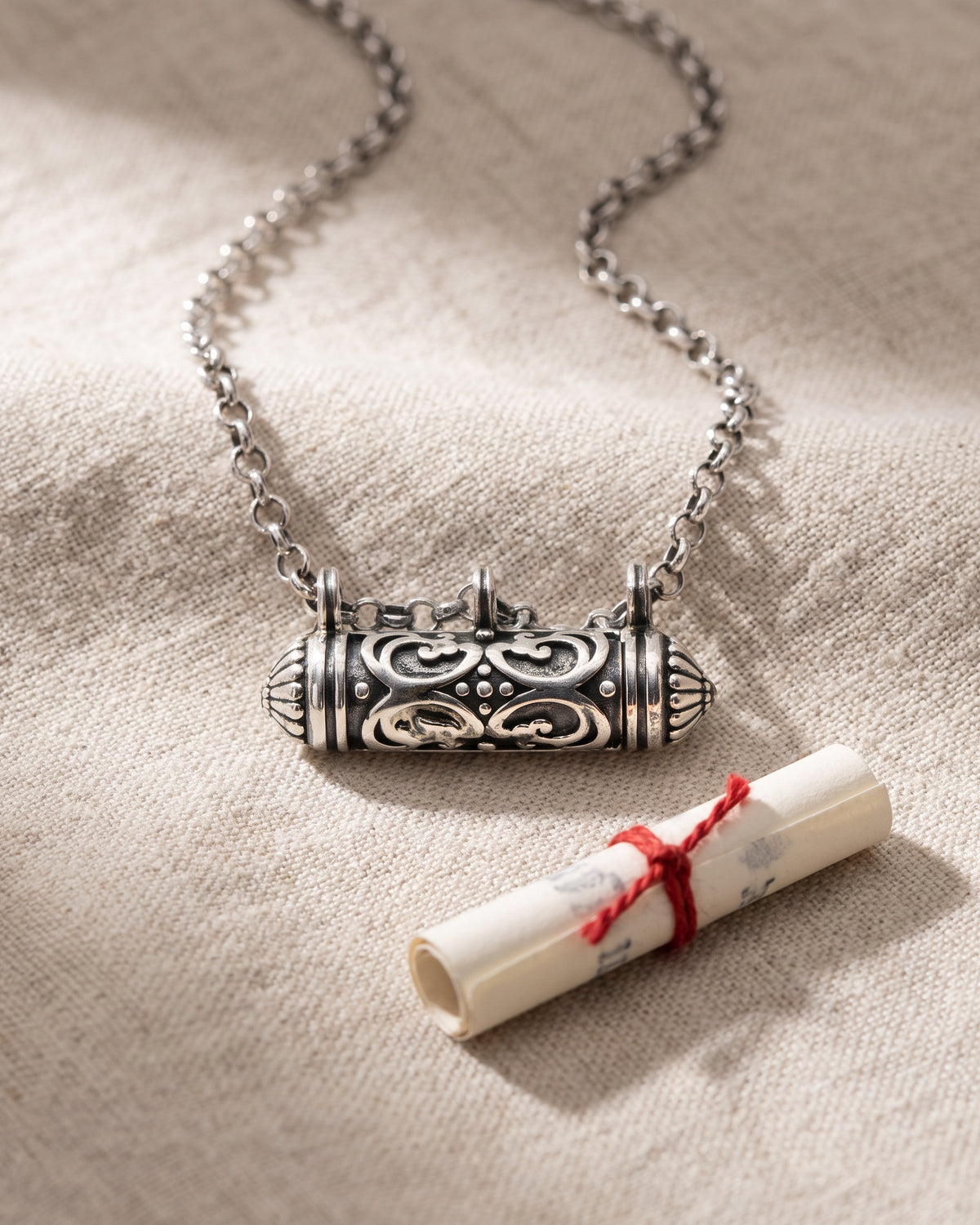
A taweez is a small amulet that holds writing: usually verses of the Qur'an, names of God or prayers, folded or rolled and carried in a little case or pouch, worn on the neck or tied on the arm. You will also see it spelled ta'wiz or tawiz, and in Bengali it is called tabij. This guide explains where the word comes from, what a taweez holds, how long people have worn them, the different views on wearing one in Islam, and how the Taweez from Kavacha Designs | Sacred Armor™ relates to the tradition.
What the word means
Taweez comes from the Arabic ta'widh, from a root that means to seek refuge. Urdu and Hindi took the word from Arabic. The same root opens the last two chapters of the Qur'an, which begin "Say: I seek refuge", and the Encyclopaedia Iranica notes that a taweez often carries those two chapters.
Two related words turn up often. Hirz means protection, or a fortified place. Tamima is the older word: the Encyclopaedia Iranica records that Arabs before Islam already wore written charms on the body and called them tamima.
What is inside a taweez
The heart of a taweez is the writing, not the case. Britannica describes Muslims today carrying "verses from the Qur'an, the names of God, or associated sacred numbers within small satchels." The Metropolitan Museum of Art describes amulet papers "covered with prayers, signs, numbers, and decorative motifs", which are carried in a pocket, or rolled and placed in an amulet case.
The container varies from place to place: a small pouch, or a small case of metal. In Iran, the Encyclopaedia Iranica records a written prayer placed in a small metal container, gold for women and silver for men, and tied around the arm or worn around the neck.

A long history, in museum collections
Amulet cases made to be worn survive from many centuries and many places. A few in public collections:
- Egypt, 11th–12th century. A small gold case at the Aga Khan Museum. The museum notes it "likely held paper with protective verses from the Qur'an", and three small loops on top show it was once strung as a pendant.
- Egypt, 11th century. Also at the Aga Khan Museum: a printed paper amulet, folded many times so it could be worn inside its small lead case.
- Iran, about 1800. An arm amulet at the Victoria and Albert Museum. The museum explains that scrolls of Qur'anic text were rolled up and kept in cases like it, and that this "is still practised by some Muslims today."
- Iran, Qajar period. A case and its scroll at the Smithsonian's National Museum of Asian Art, with three loops so it could be worn as a horizontal pendant.
- Present-day Uzbekistan, 19th century. A silver case set with coral and turquoise at the Met, "intended to hold furled pieces of paper inscribed with verses of the Qur'an or other holy words."
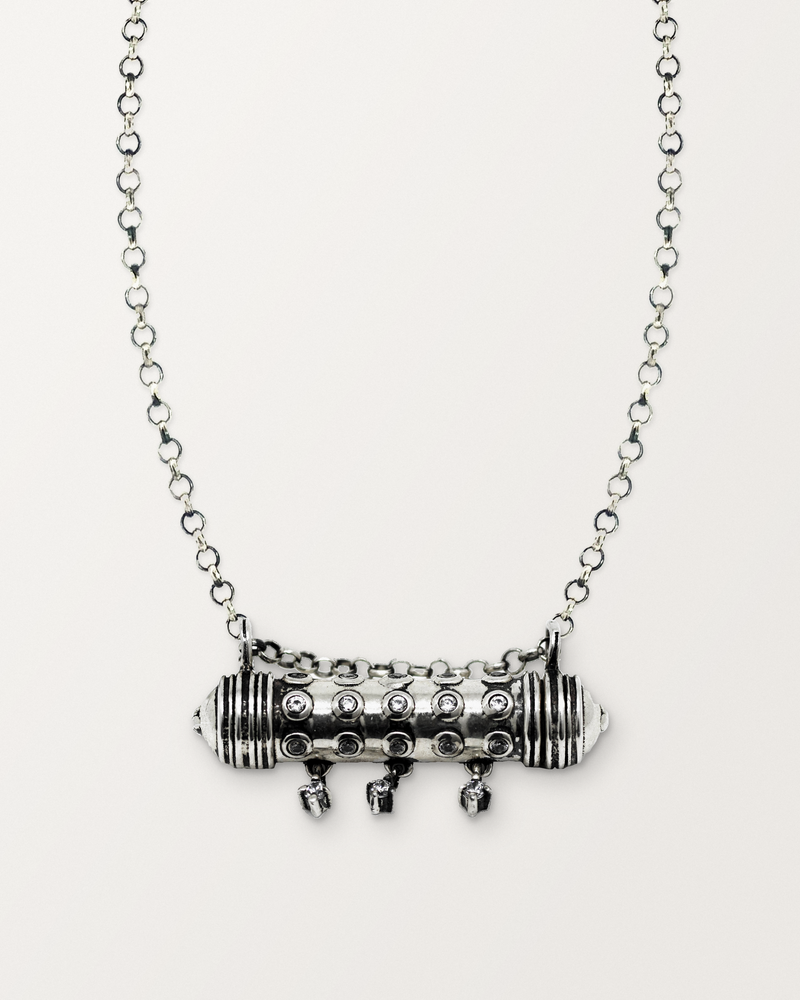
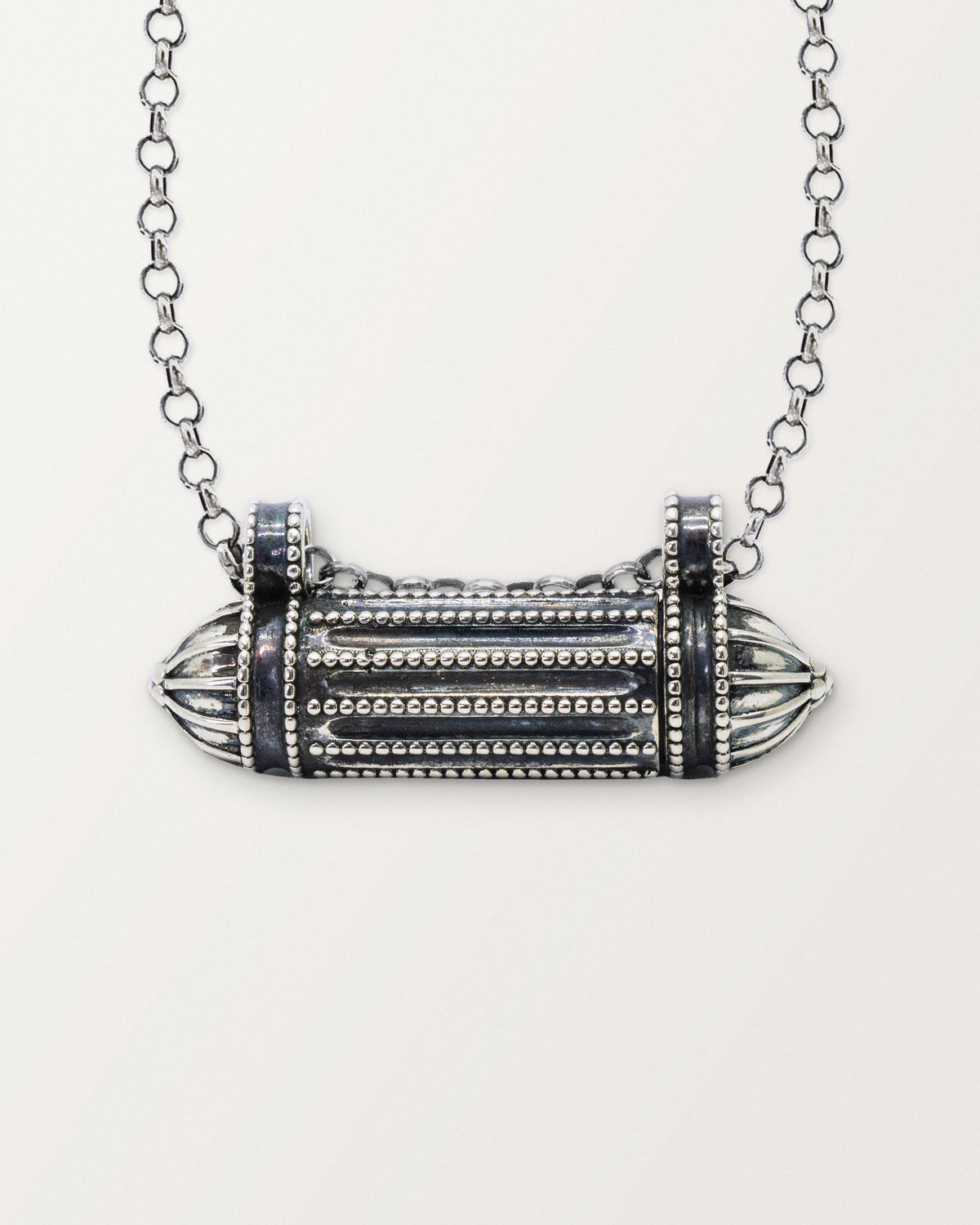
In South Asia the taweez also appears in jewelry itself: the V&A holds a silver bracelet from Karnataka, in South India, whose capsule elements represent amulets, taweez. Several Kavacha designs come from the same world. Jayashri's Kerala Small, Kerala Large and Kerala Vertical are inspired by the early 20th-century tawiz belt worn by Muslim women in Kerala, and Hirz takes its form from the silver amulet vessels worn by Bedouin women across the Middle East, North Africa and the Arabian Peninsula. Afghani Tribal Emerald began with an antique amulet from Jayashri's own collection and carries the adornment of the Koochi women of Afghanistan, whose amulets often held prayers from the Qur'an.
Is wearing a taweez allowed in Islam?
Muslim scholars hold different views, and people ask this question often. We describe the views here; we don't give religious rulings.
- Where scholars agree. Scholars agree that an amulet containing anything other than the Qur'an or the names and attributes of God is not permitted.
- The view that it is permitted. Many scholars permit a taweez that contains only the words of the Qur'an or the names of God, on the condition that the wearer does not believe it has any effect by itself. SeekersGuidance, a Hanafi source, describes this as the view of the great majority of scholars.
- The view that it is not permitted. Other scholars hold that even a taweez with only Qur'anic verses should not be worn, citing hadith against amulets and the wish to close any path to shirk. IslamQA gives this view, quoting a fatwa of the Permanent Committee in Saudi Arabia.
If this matters to you, ask a scholar or imam you trust. Kavacha takes no position. We don't write, supply or sell verses; the chamber comes empty, and what you place in it is your choice.
How a taweez is traditionally treated
Customs differ between families and schools, so treat these as examples, not rules. A Hanafi reference quoted by SeekersGuidance says a taweez should be taken off before going to the toilet. The Encyclopaedia Iranica records a Persian custom that, once the prayer is written and placed in its container, it should not be taken out or unrolled. If someone prepared your taweez for you, follow their guidance first.
The Kavacha Taweez
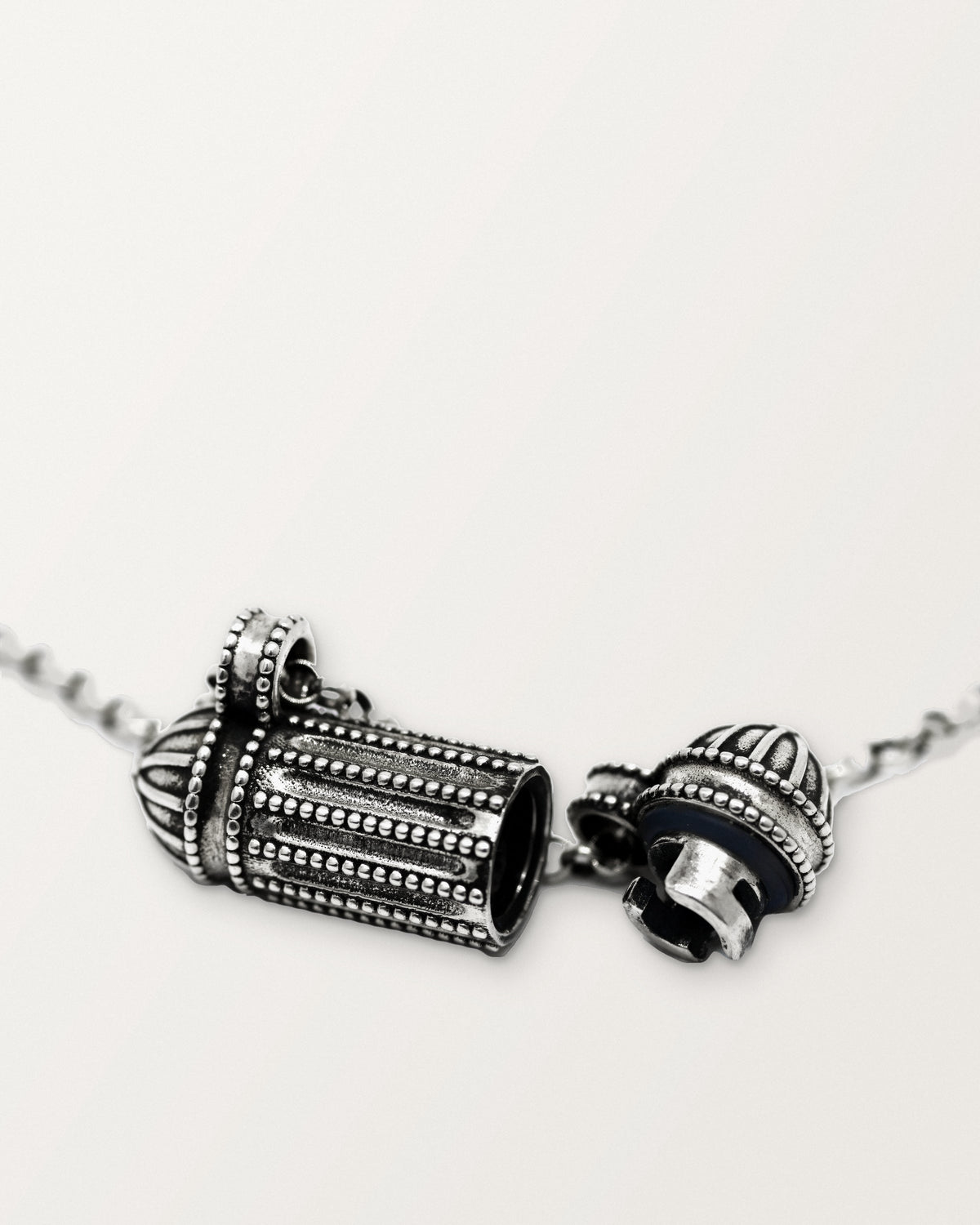
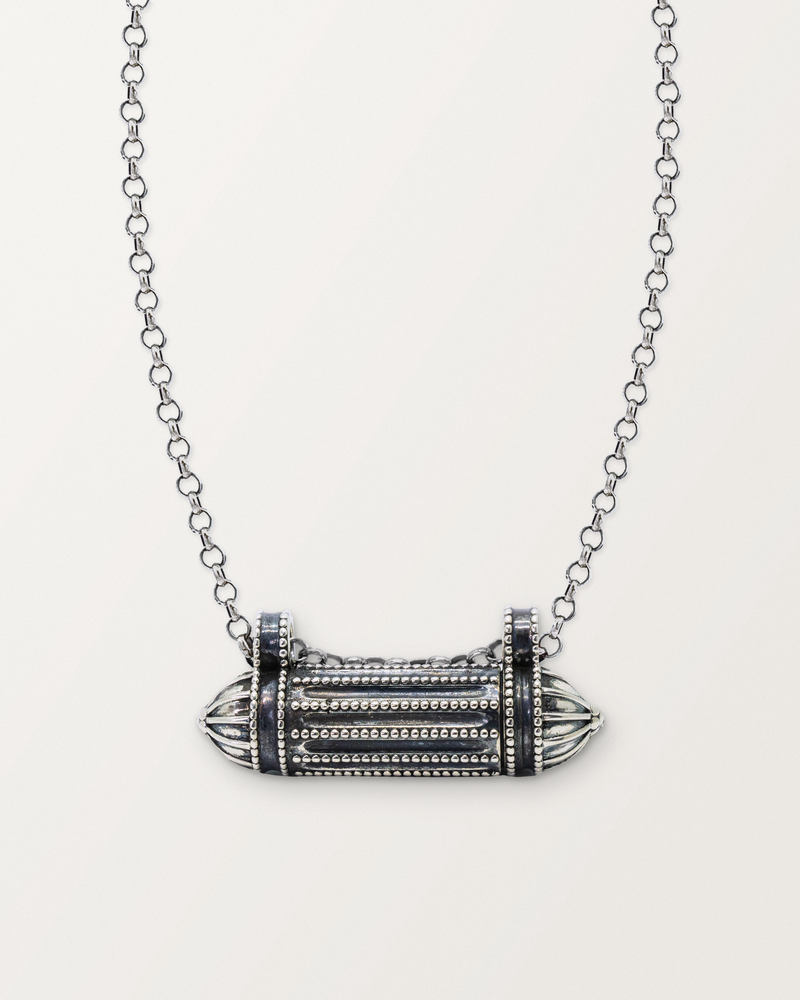
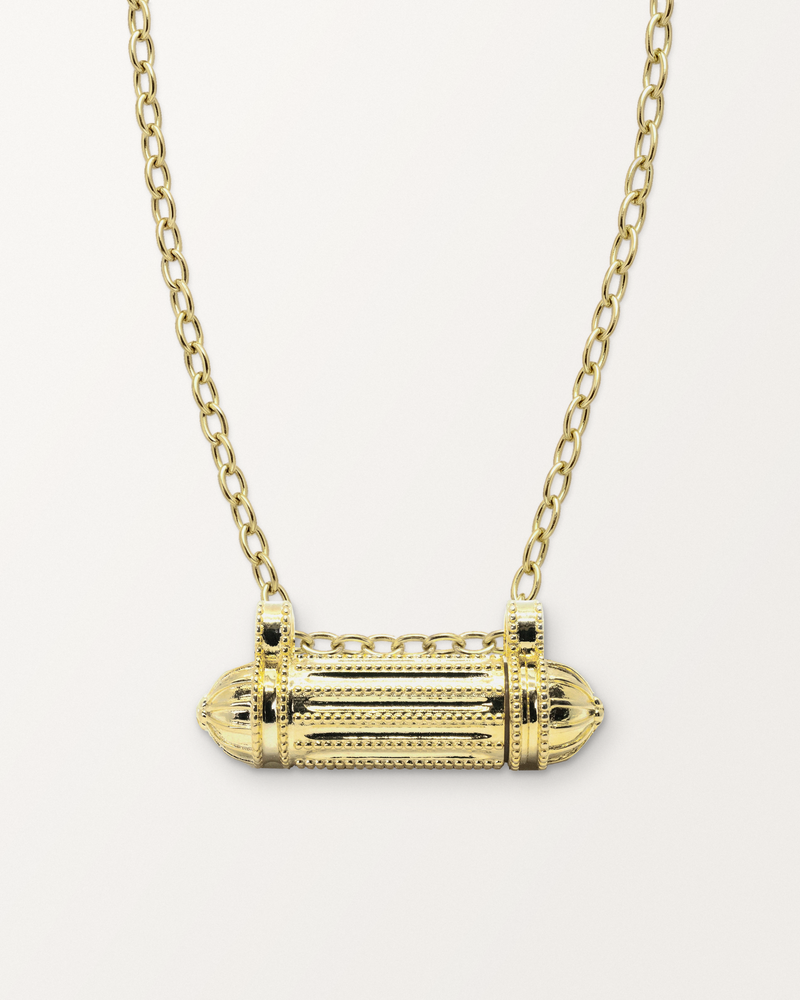
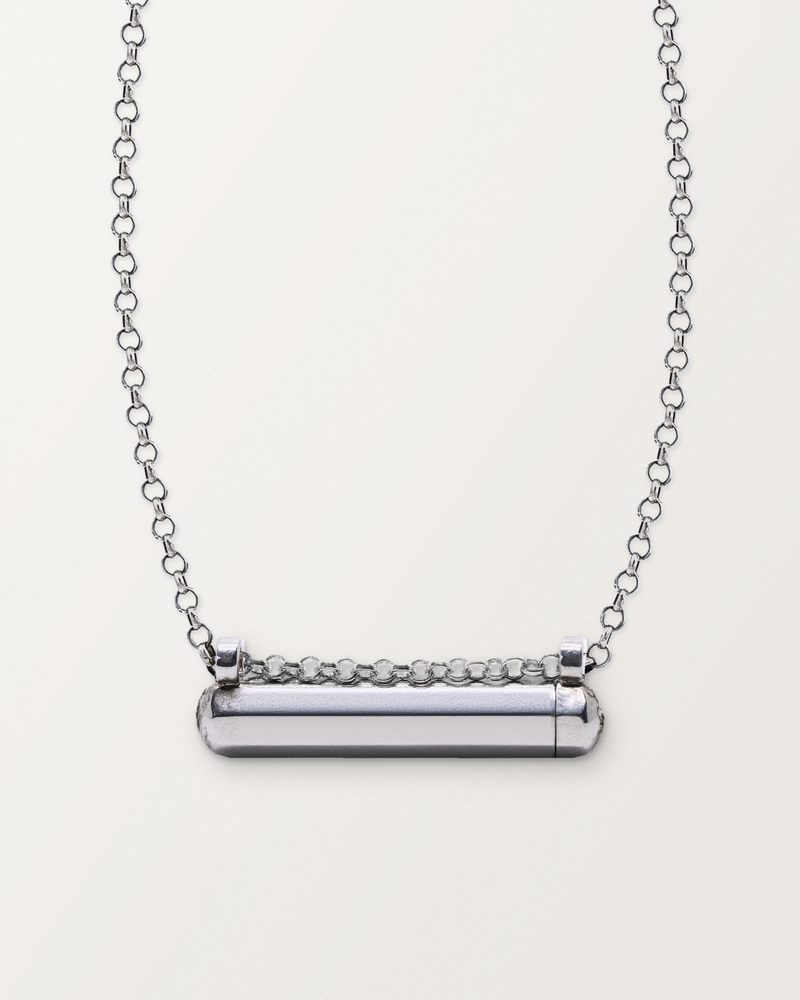
Our Taweez is inspired by the traditional taweez necklace: a slim capsule worn close to the heart, about 35 × 10 mm. It is cast in 925 sterling silver, ready to ship within 2 business days, or made to order in 14K or 18K yellow gold, which takes 4 to 6 weeks. On the gold edition, every metal part, chain and clasp included, is 14K or 18K yellow gold.
It opens by hand to a private chamber. A twist-lock closes it: precisely fitted male and female parts align and twist together, and a silicone seal makes the fit snug. Measured from its design files, the chamber holds about 0.88 ml, and a strip of ordinary paper about 21 mm wide and 120 mm long, rolled loosely, fits inside. A real fill is somewhat less, so the cap still closes. Keep what you place in it completely dry, and please don't treat it as watertight.

Some people place a written verse or prayer inside. Others keep a lock of hair, a note in someone's handwriting, or a little earth from a place they love. If you have a question about the size or the closure, write to us on our contact page.
Questions people ask
What is a taweez?
A taweez is an amulet that holds writing, usually verses of the Qur'an, names of God or prayers, folded or rolled inside a small case or pouch and worn on the neck or arm. The word comes from Arabic and means seeking refuge.
What is written inside a taweez?
Traditionally, verses of the Qur'an, often its last two chapters, the names of God, prayers, or sacred numbers. Whoever prepares the taweez chooses the text.
Is wearing a taweez haram?
Scholars differ. Many permit a taweez that holds only the Qur'an or the names of God, if the wearer does not believe it works by itself; others hold that it should not be worn. Kavacha takes no position; ask a scholar you trust.
What is the difference between a taweez and a hirz?
Both are words for an amulet, often one that holds a written prayer. Taweez comes from the Arabic for seeking refuge and is the common word in South Asia; hirz means protection or a fortified place. Our Hirz takes the capsule form of the Bedouin hirz.
Does the Kavacha Taweez come with a verse inside?
No. It comes empty. We don't write or supply verses; what you place inside is your choice.
Sources
- Encyclopaedia Iranica, "Doʿā-nevīsī" and "Charms".
- Britannica, "Amulet".
- The Metropolitan Museum of Art, "Amulets and Talismans from the Islamic World" and Amulet Case, 91.1.1144.
- Aga Khan Museum, AKM599 and AKM508.
- Victoria and Albert Museum, arm amulet, 1302-1873 and bracelet, IS.452-2019.
- Smithsonian National Museum of Asian Art, "Amulet case and scroll".
- Banglapedia, "Folk Medicine" (tabij).
- SeekersGuidance, "Is Using a Ta'wiz (Amulet) Permissible?"; IslamQA, answer 10543.
More guides: What is a kavach?, What you can keep inside an openable necklace, 14K, 18K or sterling silver and Keeping a loved one's ashes close. Read more about what a Kavacha is, or browse the whole collection.