
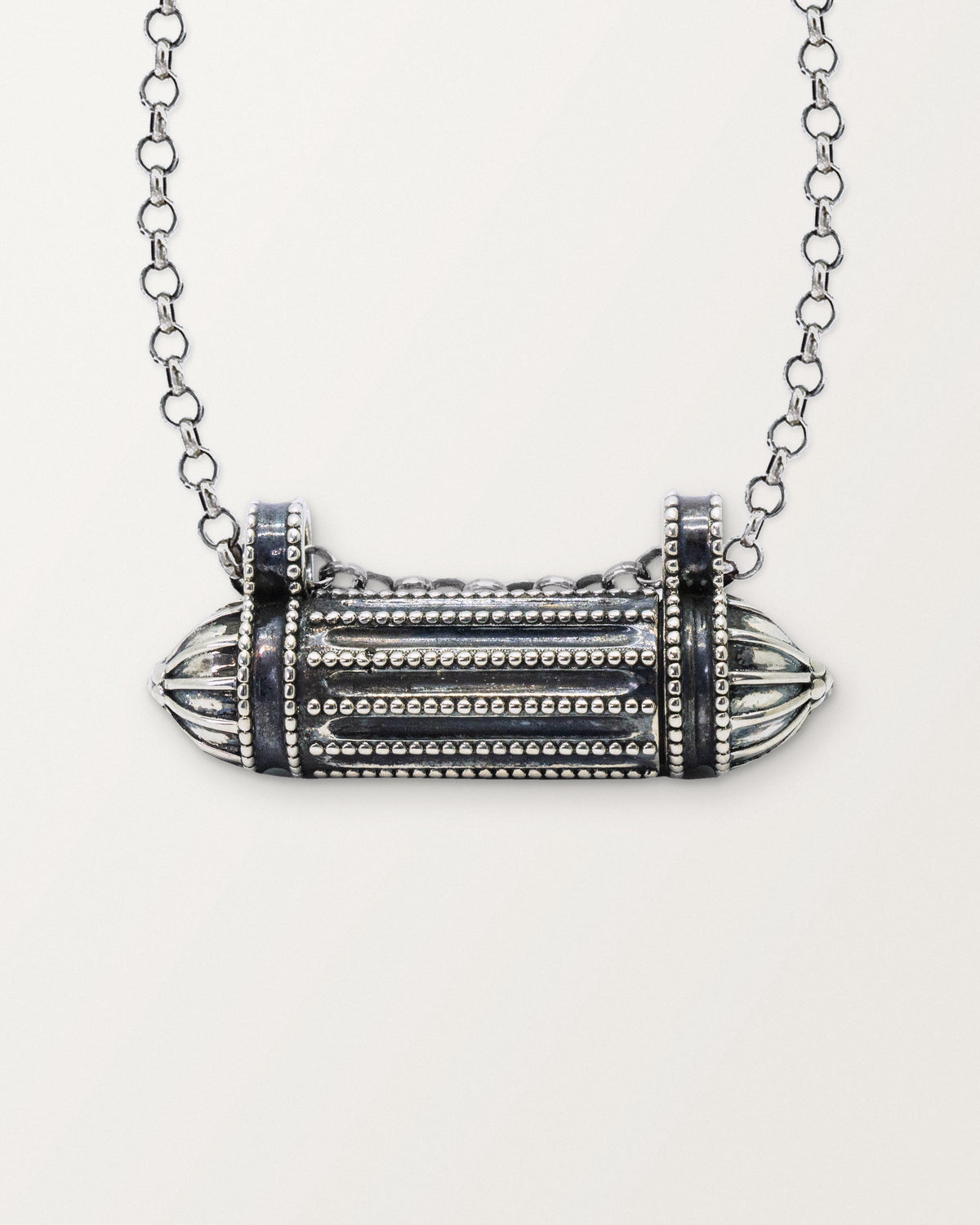
Keeping a loved one's ashes close: how to choose an heirloom piece
How people keep a little of a loved one's ashes close, what to look for in a piece made to last, how to fill it gently, and how much each Kavacha holds.
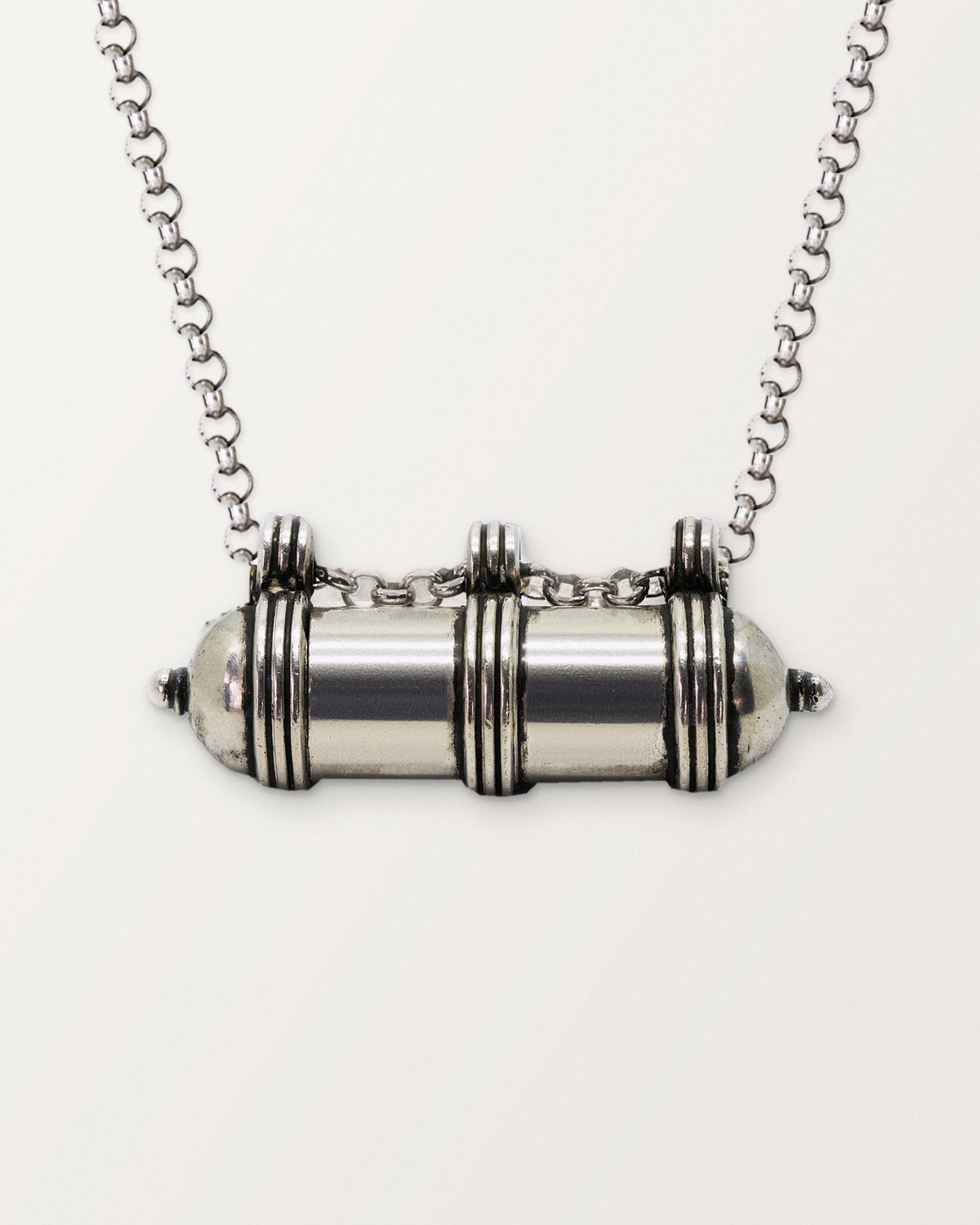
When someone we love dies, many of us want to keep something of them near: their handwriting, a lock of hair, or a little of their ashes. This guide walks through the ways people do that, what to look for in a piece meant to last for generations, how to fill one with care, and how much the different designs from Kavacha Designs | Sacred Armor™ can hold.
Ways people keep ashes close
There is no single right way. Families often divide ashes among several places, and each has its own purpose.
- An urn holds most or all of the ashes, at home or at a resting place.
- A keepsake urn is a small vessel for one person's share, often kept on a shelf or an altar.
- Jewelry with a chamber holds a very small amount, so it can be worn every day or kept with you.
A wearable piece holds only a small amount, and that is the point: it keeps a trace of someone with you, not all of what remains. It is usually filled from a small portion set aside, while the rest stays in an urn or is scattered or laid to rest.
Before you decide: faith and family
Traditions differ, and some don't keep ashes at all. Some families scatter or immerse ashes as part of their rites, and some faiths don't cremate. If you're unsure, it can help to talk with your family, or with whoever guides your family's rites, before dividing any ashes.
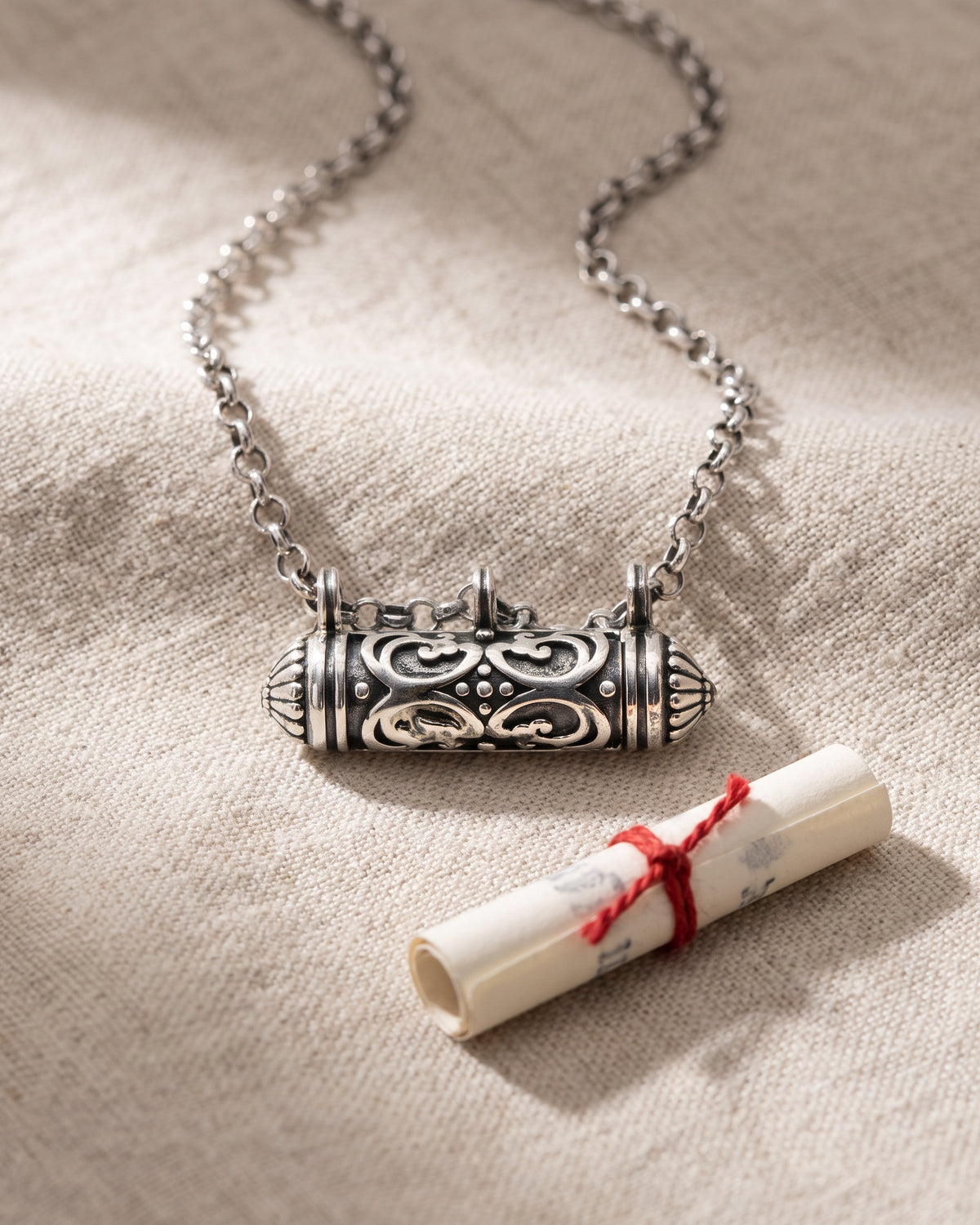
A chamber can hold other things just as well. Jayashri, who designs every Kavacha, has kept dust from Vrindaban in India, handwritten mantras and a lock of hair from her daughter's first haircut in her own. A lock of hair, a rolled note in their handwriting, or earth from a place you shared can carry the same meaning.
If you are living with loss, our page Carry Them Close offers a simple ritual in three steps, ways to honor someone in your tradition or none, and a card to print and keep with your piece.
What to look for in an heirloom piece
A piece that holds ashes should be made to outlast you. When you compare pieces, look at these four things.
- The metal. Precious metal throughout, not a coating over a base metal that can wear through. Every Kavacha is cast in 925 sterling silver, or made to order in 14K or 18K yellow gold. On the gold editions, every metal part, chain and clasp included, is 14K or 18K yellow gold; the chamber inside is hollow by design.
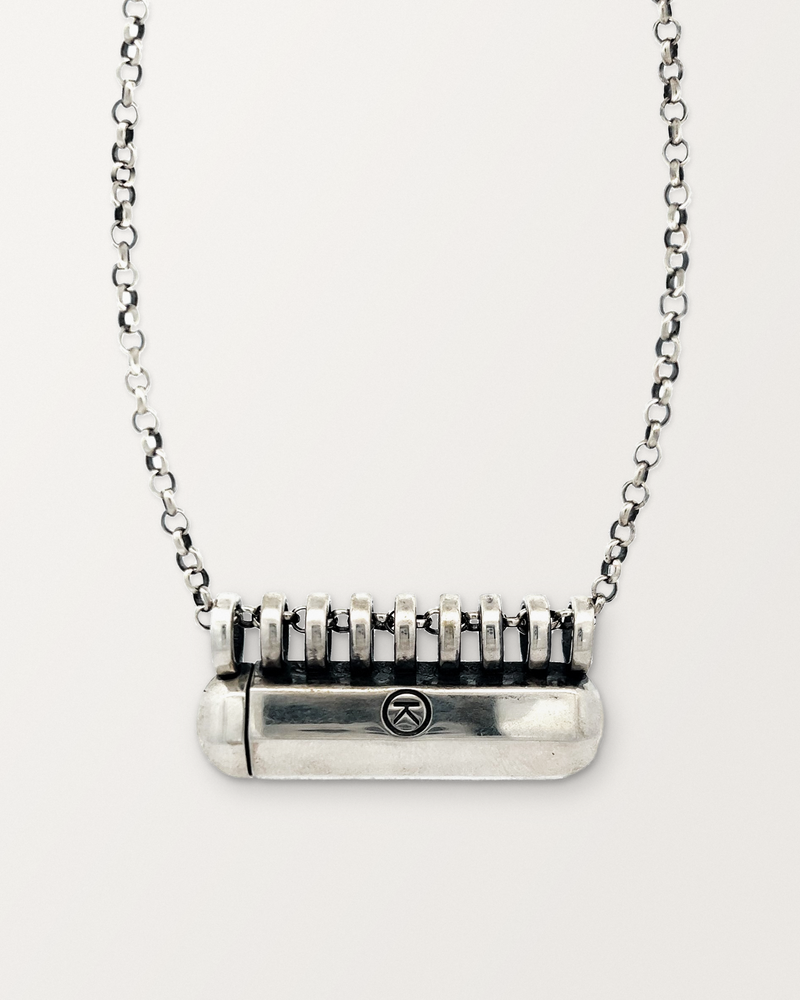
- The closure. Look for a closure that seats firmly by hand and doesn't depend on glue. Every Kavacha necklace closes with a twist-lock: precisely fitted male and female parts align and twist together, and a silicone seal makes the fit snug. The end cap is held on the chain by its bail, so even when the amulet is open, the cap stays attached and cannot slip past the clasp.
- How it opens. You should be able to open and close it by hand, at a table, without tools. Look for a clear photograph of the piece open, so you can see the opening before you buy.
- Honest care guidance. A maker should tell you plainly what the piece can and can't take. Our water resistance has not been tested, so please don't treat a Kavacha as watertight, and take it off before swimming, bathing, hot tubs or saunas.

How to fill it
Take your time, and choose a quiet moment. Our care page gives the full steps; in short:
- Work somewhere dry and still. Sit at a table in a dry room, away from open windows and fans. Make sure the piece, your hands and the ashes are completely dry.
- Use a small funnel. A small funnel or a folded piece of clean paper helps. Work from a small portion set out on a dish or paper rather than from the urn itself.
- Add a little at a time. Tap the piece gently so the ashes settle, and stop well before the top. Fill only enough that the cap closes easily.
- Clean the opening. Brush away any dust from the opening and the silicone seal, so nothing sits across it.
- Close by hand. Twist the cap closed by hand until the fit is snug. Never use tools, and don't oil or grease the seal.
Please don't place liquids, oils, perfume or anything damp or fresh inside. Once ashes are inside, the piece is not meant to be opened and closed casually or repeatedly, although it can be reopened when necessary. Never glue the cap. We'd like to hear from you before you fill a Kavacha with ashes, or if the seal ever looks worn or the cap no longer closes snugly, and we can talk you through it. The full guidance is on Caring for Your Kavacha.
How much each design holds
We measured each chamber from its 3D design files. The figures below are the inner space with the cap closed. A real fill is somewhat less, because you leave room for the cap, and on some designs part of that space sits inside the cap itself. Ashes are a coarse powder, so these figures are a guide, not a promise of weight.
- Kerala Large: about 3.7 ml. The largest chamber in the collection.
- Pankaj: about 3.6 ml.
- Vana: about 1.7 ml.
- Agraja: about 1.5 ml.
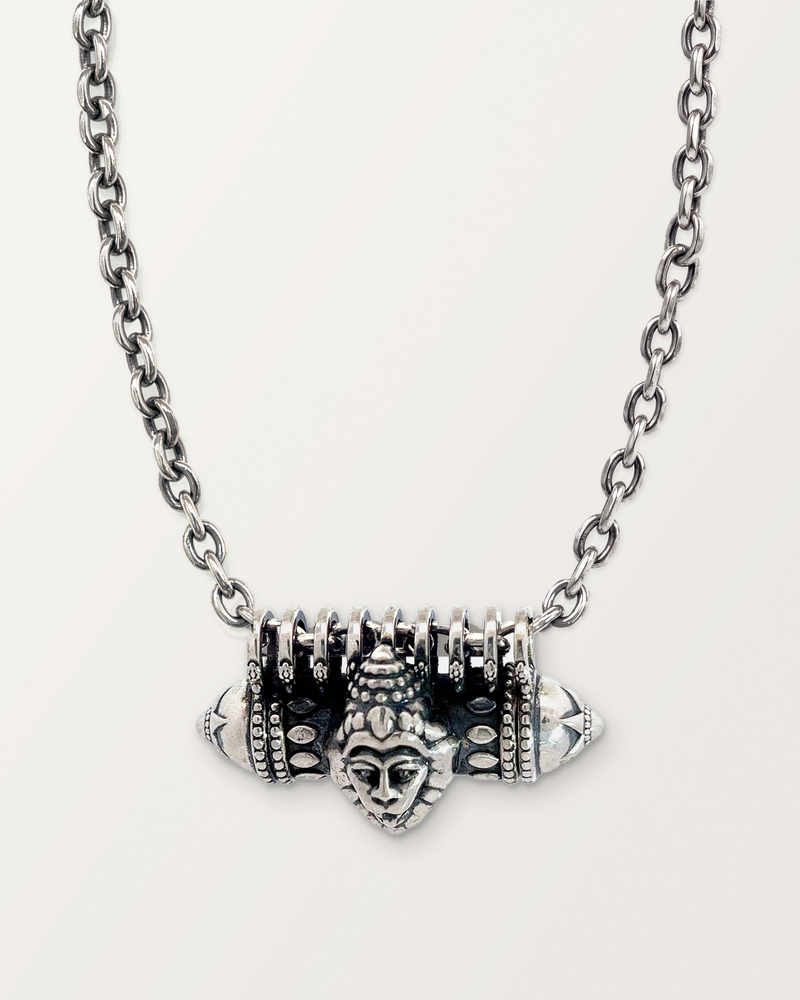
- Narashimha: about 1.4 ml. The first design in the collection.
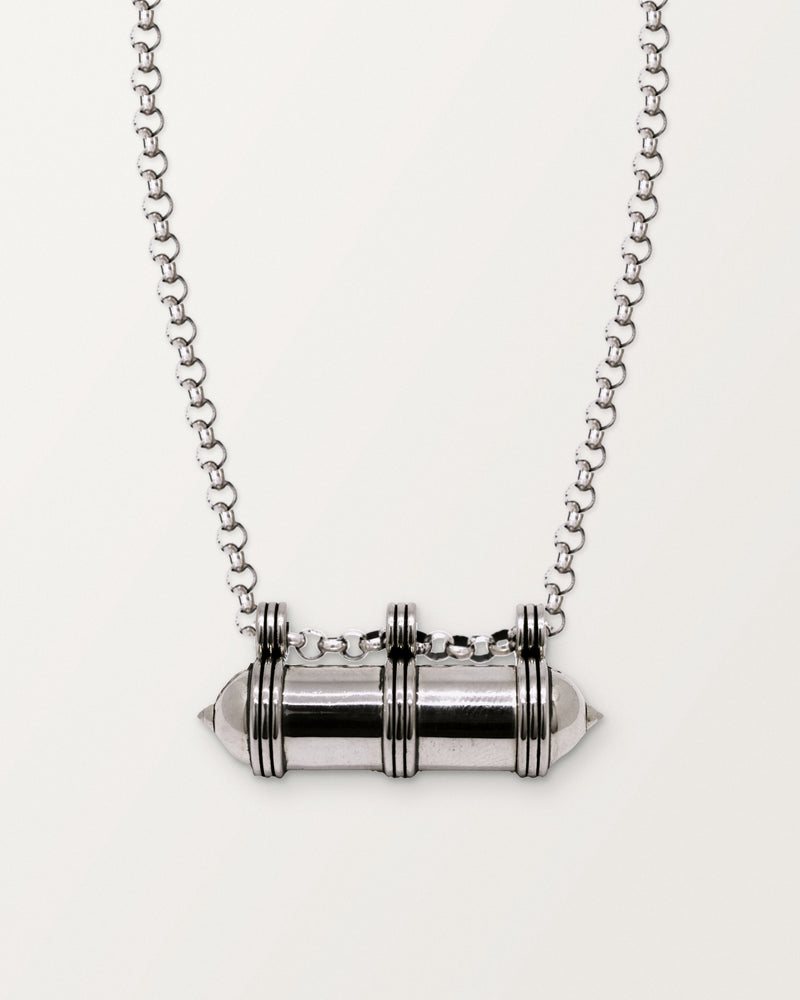
- Capsule Small: about 0.5 ml. A quiet, simple shape for a very small amount, a lock of hair or a rolled note.
Across the collection, the chambers run from about 0.2 ml (Vámana) to about 3.7 ml. Each design is made in sterling silver, and most are also made to order in 14K or 18K yellow gold.
The opening matters as much as the space inside. The Kerala Large and the Pankaj open about 11 to 12 mm wide, which makes them the easiest to fill. The slimmest designs, such as the Hirz and the Shakti, open about 4 to 5 mm, which suits a rolled note or a lock of hair better than powder. Chamber sizes lists the inside and the opening of every design.

The designs with the most room inside are together in necklaces for ashes.
If you're choosing between designs, tell us what you want to keep and we'll help you find the right one. You can reach us on our contact page.
After it is filled
Wear it close and keep it dry. Put on perfume, lotion and sunscreen before your Kavacha, not after, and wipe it rather than soaking it. Now and then, check that the cap still closes snugly by hand, and store it in its pouch when you are not wearing it.
Questions people ask
Can a Kavacha hold a loved one's ashes?
Yes. Every Kavacha opens to a private chamber that can hold a small amount of ashes. It is made as an heirloom amulet, in sterling silver or made to order in 14K or 18K yellow gold.
How much ash fits inside?
A small amount. The inner space with the cap closed runs from about 0.2 ml to about 3.7 ml, depending on the design. A real fill is somewhat less, so fill only until the cap closes easily.
Is it waterproof?
Please don't treat it as waterproof. The silicone seal makes the fit snug, but water resistance has not been tested. Take your Kavacha off before swimming, bathing, hot tubs or saunas, and keep the chamber and what's inside completely dry.
Can I open it again later?
Yes, it can be reopened when necessary. Once ashes are inside, we recommend not opening it casually or repeatedly. Please don't glue the cap: glue makes the closure permanent.
What else can it hold?
A lock of hair, a written prayer or note, earth or sand from a place you shared, or another small, dry keepsake. Never liquids or anything damp.
Read more about what a Kavacha is, or browse the whole collection.