Amulet or talisman: what is the difference?
Amulet and talisman are often used for the same thing. Where reference books separate them, an amulet guards the wearer and a talisman brings good fortune. Here is where each word comes from, and which one fits a Kavacha.
An amulet and a talisman are both small objects a person wears or carries for what they mean, and in everyday English the two words are often used for the same thing. Where reference works do separate them, an amulet is said to guard the person who wears it, and a talisman to bring good fortune. Kavacha Designs | Sacred Armor™ makes amulet necklaces that open to a private chamber, and every one comes empty.
Where the two words come from
Amulet comes from the Latin amuletum, which Pliny's Natural History describes as "an object that protects a person from trouble". Talisman reached English through French from the Arabic tilasm, which goes back to the ancient Greek telesma, a word for completion or a religious rite. So one word arrived through Rome, and the other travelled through the Greek and Arabic worlds before it reached Europe.
How the two are told apart
The English Wikipedia article on talismans, citing an Ashmolean Museum book on Islamic art and the Encyclopedia of Islam, draws the line like this: "An amulet protects a person or possession against evil forces while a talisman provides good fortune." The same article calls the two "closely linked" and says they fulfil "many of the same roles". In practice one object is called either name, depending on who is speaking and in which tradition. Almost anything has served as an amulet, from coins, statues and drawings to plant parts and written words.
Which word fits a Kavacha
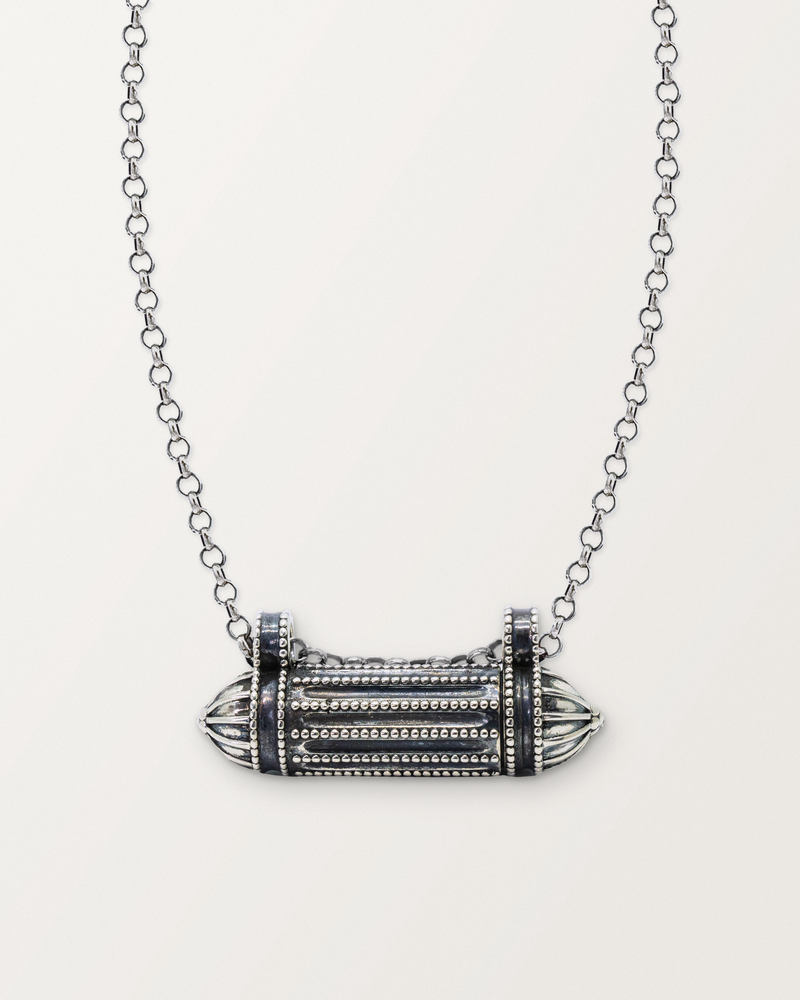
We call a Kavacha an amulet because it is worn on the body and made to hold something: a written prayer, a name, a lock of hair or a small amount of ashes. Kavacha means armor in Sanskrit. In everyday speech talisman fits too: a piece you keep close for what it carries for you.
What a Kavacha does not do is promise anything. Each piece comes empty. Kavacha does not write or supply prayers and does not promise protection or any spiritual outcome. What it means comes from what you put inside, and why. What you can keep inside an openable necklace goes through the usual choices.
Pieces people choose, and the traditions behind them
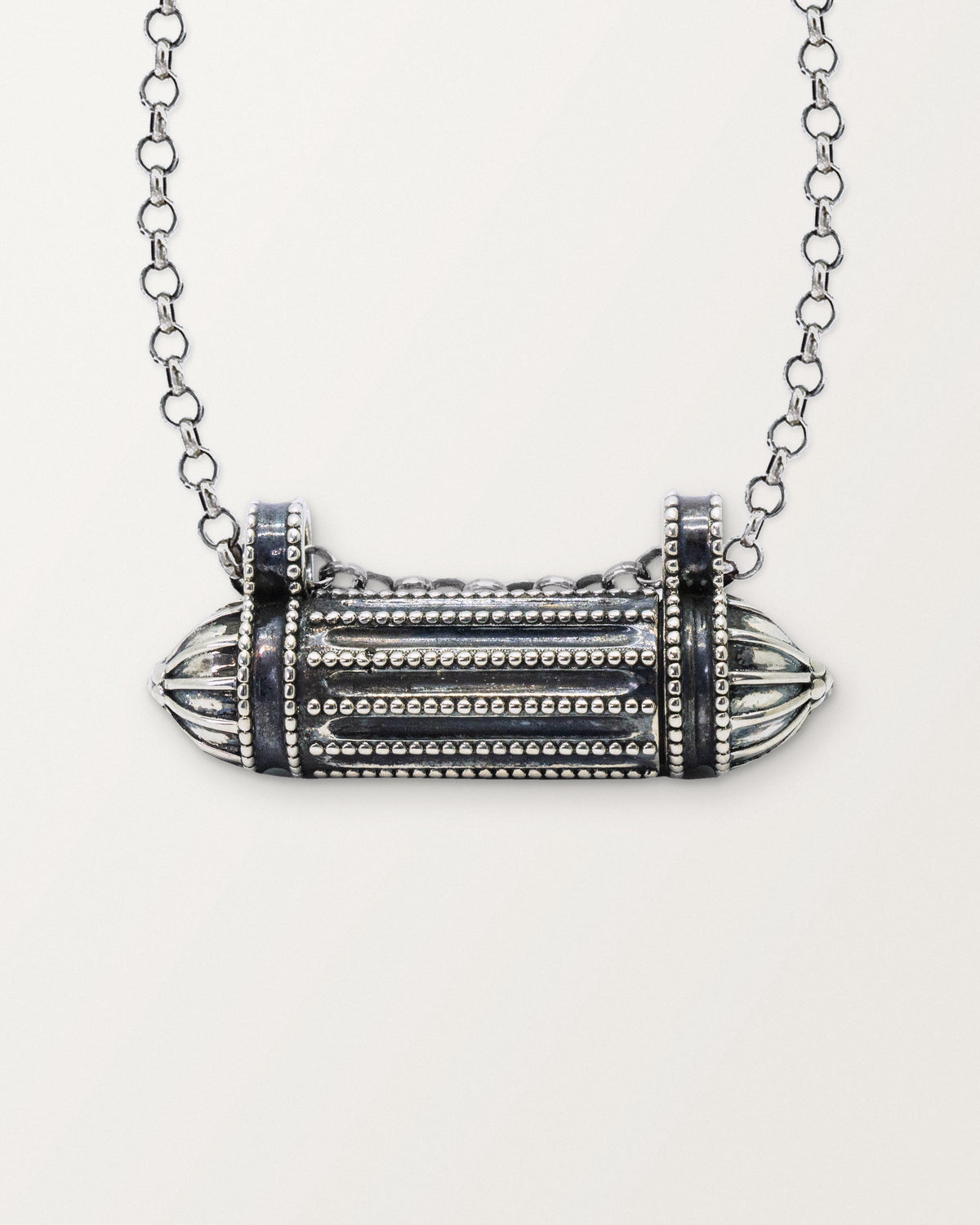
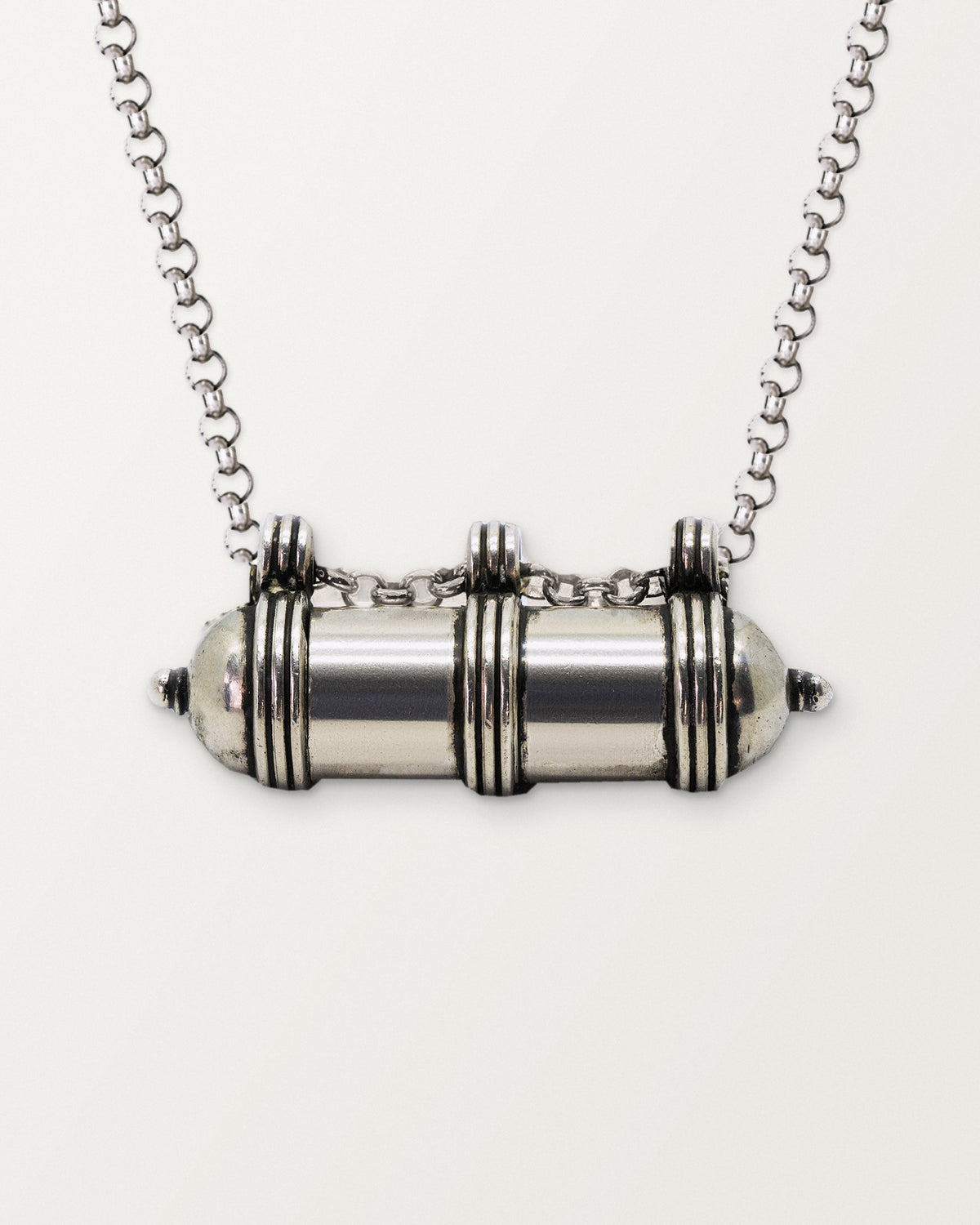
- Taweez. Drawn from the traditional taweez necklace, a slim capsule about 35 × 10 mm for a rolled written prayer. What is a taweez? tells its history.
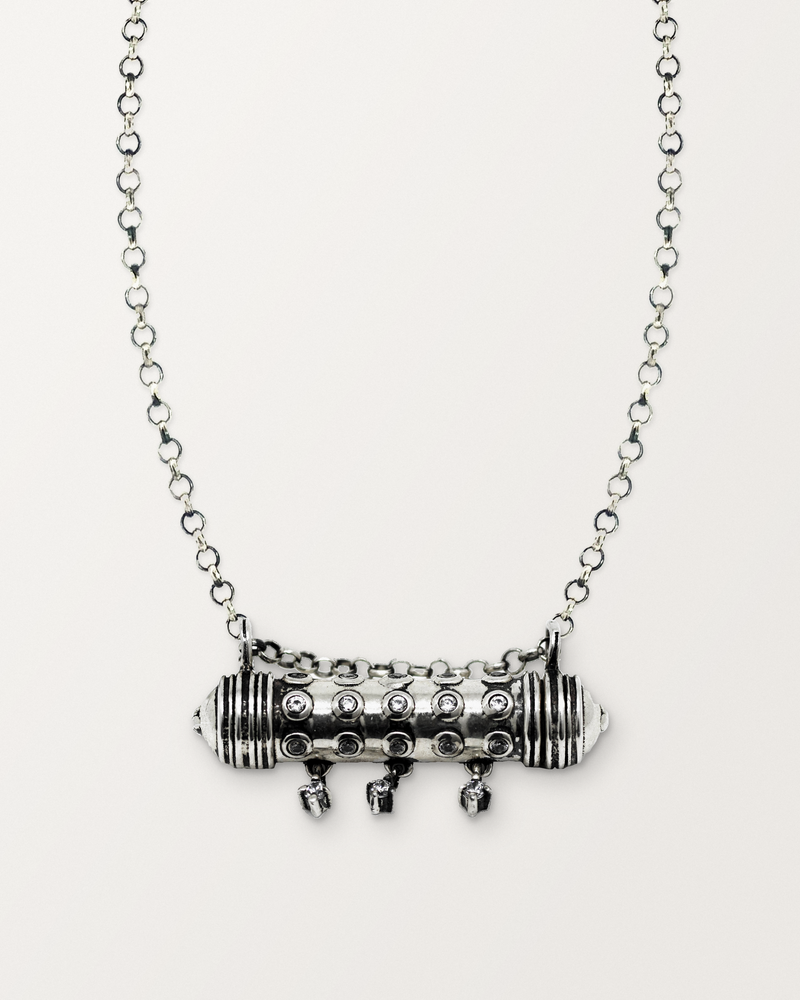
- Hirz. Taken from the silver amulet vessels Bedouin women wore, in sterling silver set with 18 white cubic zirconia.
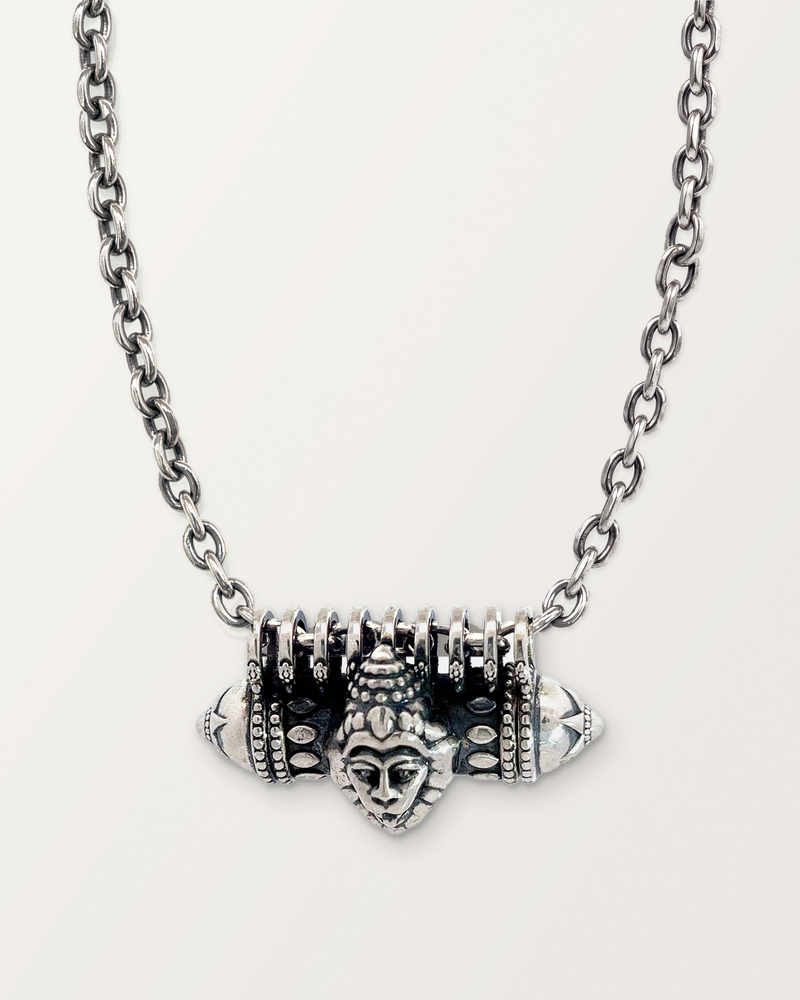
- Narashimha. The first piece Jayashri Triolo made, named for Narasimha, the half man, half lion incarnation of Lord Vishnu. What is a kavach? explains the word.
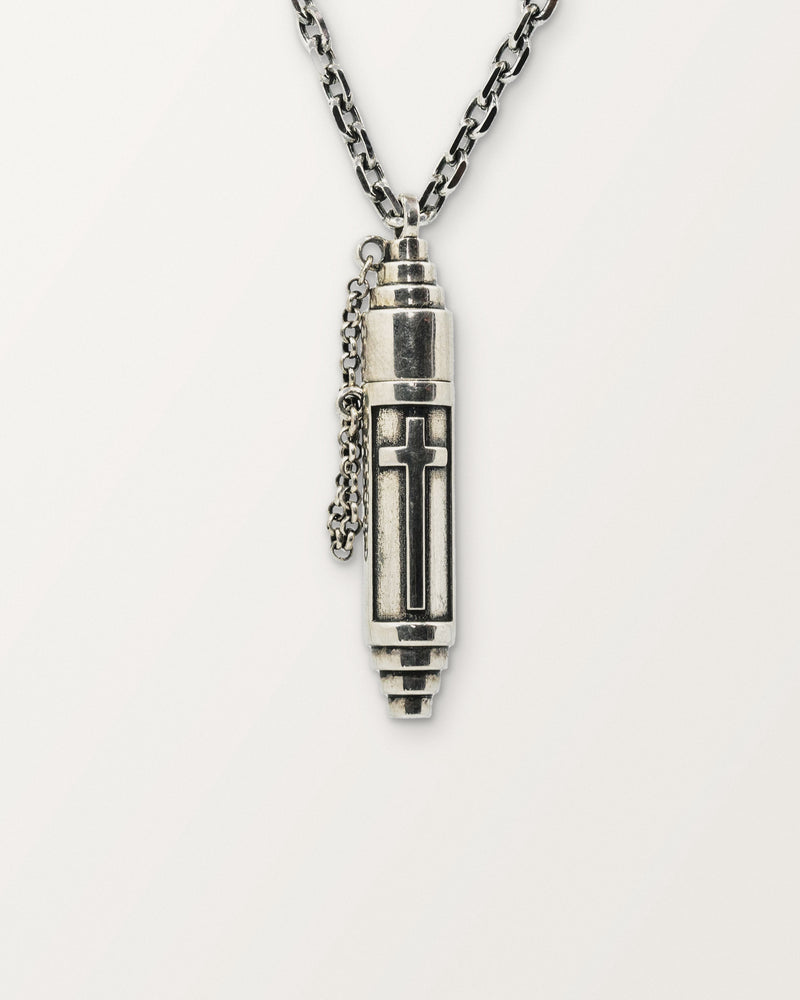
- Vertical Cross. A vertical capsule that houses the cross, honoring the Christian tradition.
- Moksha. A long, thin amulet drawn from a 1970s brass pendant from San Francisco, made to carry personal notes, prayers or affirmations.
Each is cast in sterling silver and ready to ship within 2 business days. Each is also made to order in 14K or 18K yellow gold, which takes 4 to 6 weeks.
Questions people ask
Is a talisman necklace different from an amulet necklace? Mostly in the word. Both name a pendant worn for what it means. Shops and makers use them loosely, so read what the piece is and what it holds rather than the label.
Does a Kavacha come with a prayer or a symbol inside? No. It comes empty, for your own words or keepsake.
May I wear an amulet in my faith? Traditions answer this differently, and Kavacha takes no position on it. Ask the priest, teacher or elder you trust.
For the other names people use for a necklace that opens, from locket to capsule, read What do you call a necklace that opens? Or see every design in all amulet necklaces.
Sources
- Wikipedia, "Amulet" (read 9 Oct 2026), for amuletum and Pliny.
- Wikipedia, "Talisman" (read 9 Oct 2026), for the word's path and the amulet and talisman distinction, citing Christiane Gruber, Power and Protection: Islamic Art and the Supernatural (Ashmolean Museum, 2016), and the Encyclopedia of Islam (Infobase, 2009).